
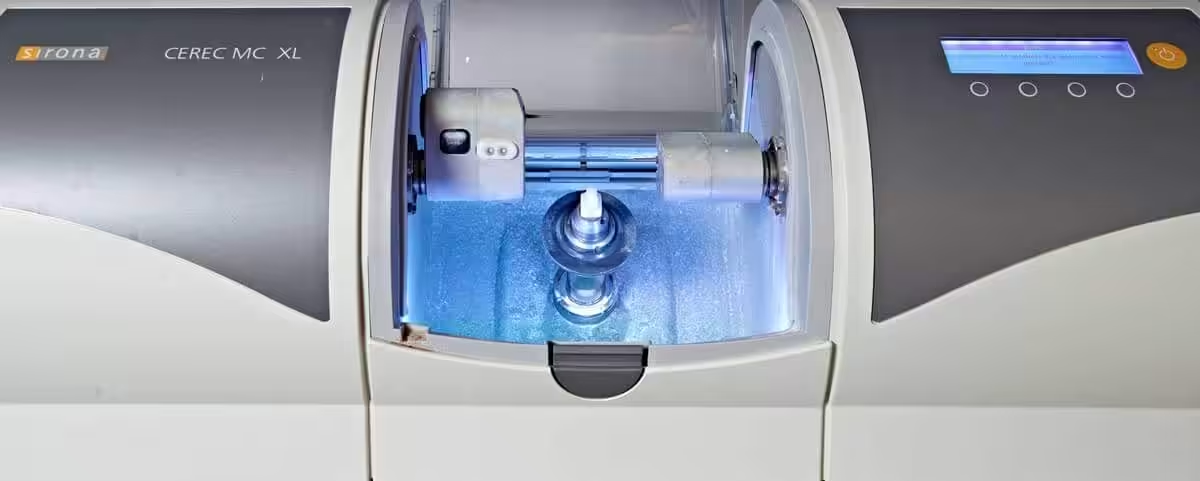
CAD/CAM Dentistry: Digital Design and Milling for Restorations in a Single Visit
Computer Aided Design (CAD) paired with Computer Aided Milling (CAM) opens up treatment options that involve far less waiting for the finished restoration.
A digital scanner captures the shape of your teeth without trays or impression putty, which most patients find considerably more comfortable. From that scan, the restoration is designed in 3D, and the software lets us study how it will meet the teeth around it and above it. The crown is then milled from a single solid block of tooth-colored material, giving it strength that can rival or exceed many laboratory-made crowns. Between improved materials and the precision of the equipment, there are now plenty of ways to produce restorations that look natural, hold up well, and cut down on repeat trips to the office. Dr. Richard LaFauci, DMD, puts this technology to work at LaFauci Dental Group for patients from Middleton, Saugus, and the towns nearby.
Want a crown finished in one visit? Call our team at 978-817-2000 to see if same-day treatment fits your needs.
Finishing Crowns and Digital Restorations in One Appointment
The clearest benefit of CAD/CAM dentistry is that a great deal of restorative work can be completed while you are still in the chair. A conventional crown normally takes at least two appointments, with a temporary worn for several weeks while an outside laboratory fabricates the permanent one. When the scanning, design, and milling all happen in our office, that can be compressed into a single visit, and you leave with the final restoration already bonded in place. Skipping the temporary also removes a familiar set of annoyances, since temporaries can work loose, leave a tooth sensitive, or simply not match the surrounding teeth for those few weeks.
Accuracy is the other advantage. Because the design is built on a detailed 3D model of your teeth and bite, the finished restoration often seats more precisely than one made from traditional impression material. A restoration that fits well leaves fewer margins where decay can start, needs less adjustment afterward, and lets your bite function the way it should. Add in modern ceramics that mimic the translucency and shade of natural enamel, and the result is a durable restoration that is difficult to pick out from the teeth beside it. You can read more about the underlying equipment on our CAD/CAM restorations page.